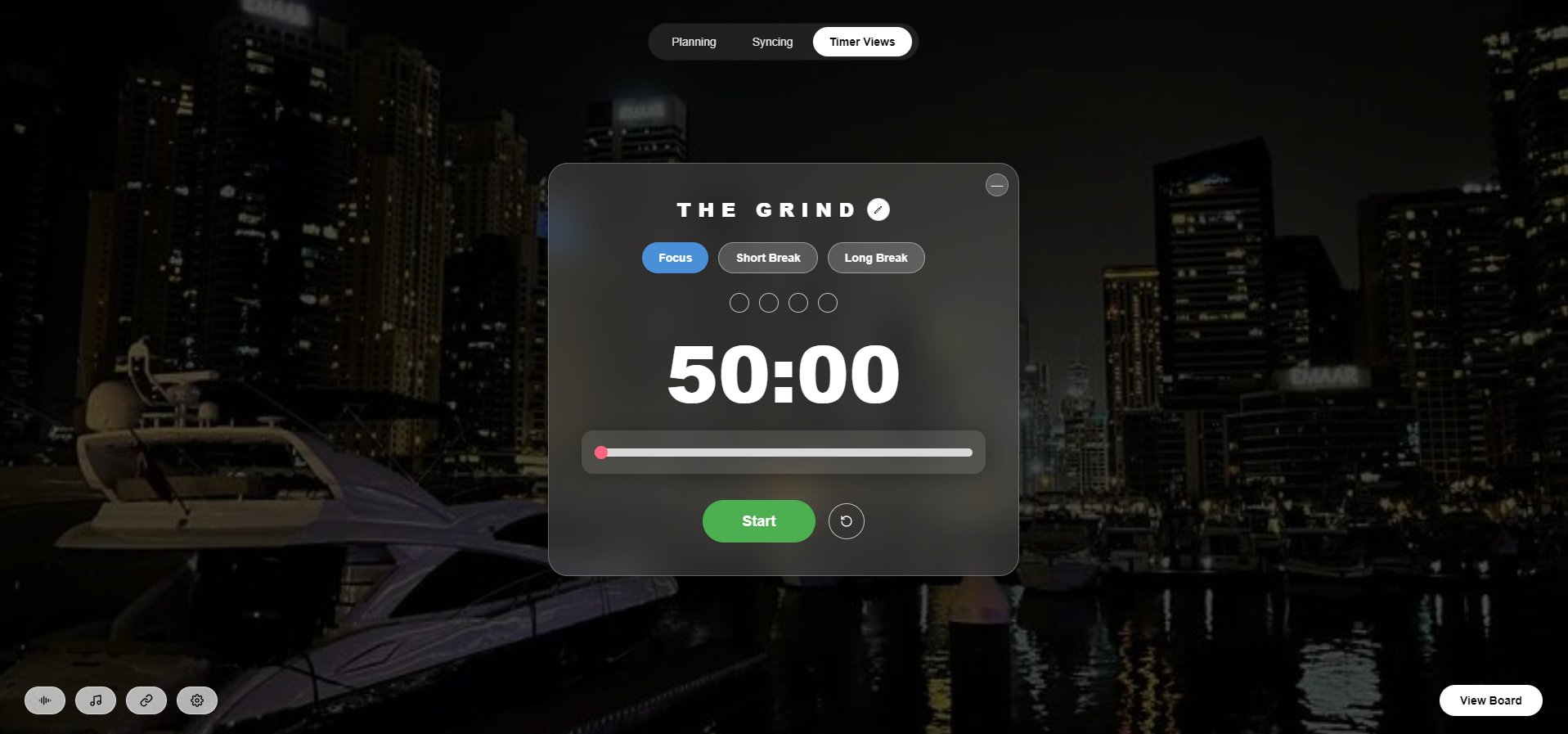
Visipomo: The Motivational Pomodoro Timer (https://claude.ai/public/artifacts/cb9e847e-ac89-417e-9e21-95946cec862f)
UX Designer and AI engineer
2 weeks; from initial research through high-fidelity prototype and live deployment
Figma, Claude, VS Code
What is Visipomo?
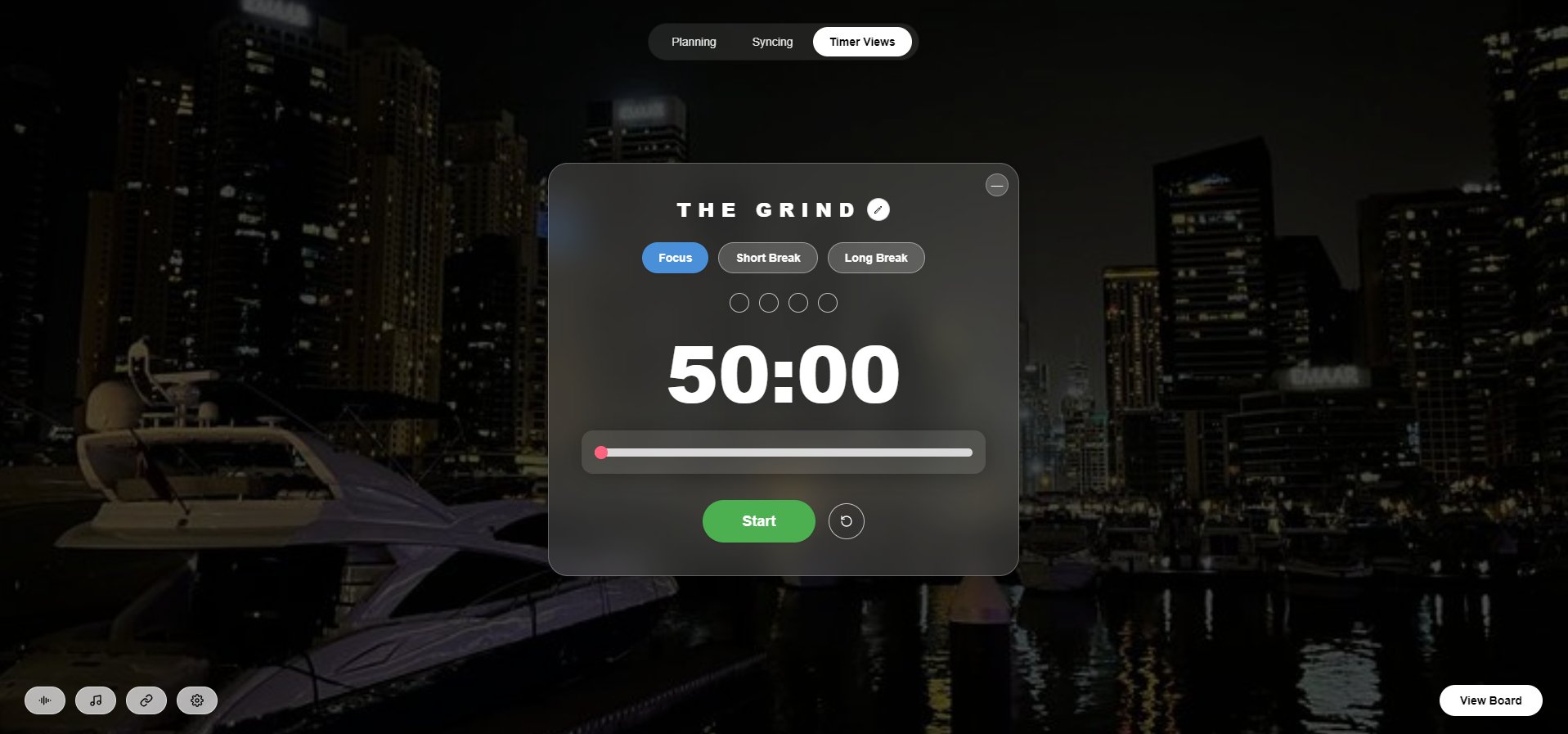
A pomodoro timer desktop app built for motivation and discipline. Visipomo uniquely combines focused work sessions with a personalized vision environment — propelling users toward their goals with every session.
The Problem
Pomodoro timers are usually aesthetic and have motivational aspects, but none are engineered to motivate users to define and achieve their goals. Users also expressed the inability to use the platforms they need — YouTube and Pinterest — relying instead on Spotify and saved images alone.
Goals
- YouTube videos & vision boards as immersive backgrounds - Plan, focus, and stay motivated — all in one place - Multiple focus modes: deep work, planning, subconscious uplifting - Success activities: journaling, habit tracking, to-do lists, motivational quotes - Verbal & passive audio cues that trigger the right mindset - Focus mode with notification blocking & desktop widget
My Role: UX Designer · UX Researcher · No-Code Developer
Responsibilities: I owned every phase of this project from discovery through launch. End-to-end app creation including user research, wireframes, prototypes, and high-fidelity mockups. Conducted usability studies across two rounds, then developed and deployed the app using AI-assisted no-code tools.
User Research: Summary
I conducted user interviews and social media analysis to validate assumptions about pomodoro usage and motivation. Initially, I assumed users primarily wanted aesthetic environments — research revealed they want deep, personalized, goal-oriented immersion. Existing apps underserved the emotional and motivational dimensions of focused work. 100% of interviewed users had used a pomodoro app before and noticed improvements in productivity. YouTube was the #1 tool users already relied on for pomodoro sessions — mostly lo-fi, study vlogs, and motivational content. 100% said subconscious sounds (reading, writing, highlighting) made them feel more motivated to work. Mixed responses on wealthy imagery — some users needed their own vision board imagery rather than generic success visuals. Context matters: users want different audio modes — silence for deep study, voice/music for planning, subliminal sounds for flow state. Free was a key barrier to adoption — users would use the app if free, raising monetization design questions.
Research: Key Insights
User Research: Pain Points
Persona
Competitive Audit
Digital Wireframes
The wireframe phase focused on establishing three core views — Planning, Syncing, and Timer Views — with the sidebar housing all success activities, vision board tools, and settings. The background always shows the user's chosen media.
Usability Findings
Two rounds of moderated usability studies were conducted with target users — goal-oriented students and professionals familiar with pomodoro techniques. Round 1 tested the low-fi prototype; Round 2 validated improvements made after the first round.
High Fidelity Mockups
Accessibility Considerations
Takeaways
Next Steps
Let's Connect
Thanks for viewing this case study. I'm a UX Designer, Product Designer, and UX Researcher passionate about creating tools that blend emotional motivation with practical productivity. I'd love to connect, collaborate, or chat about this project.